Embarking on a journey towards IoT architecture abstraction involves navigating a complex landscape of interconnected devices, protocols, and data streams. At the core of this evolution lies the need to simplify and streamline device interactions while enhancing compatibility across diverse ecosystems. As we envision an abstraction layer, it's crucial to consider the varying requirements of edge computing, cloud integration, and real-time data processing. This shift not only facilitates scalability and agility but also empowers developers to focus on innovative application features rather than getting bogged down by the intricacies of hardware specifics. Moreover, fostering open standards and interoperability becomes imperative, enabling seamless communication between heterogeneous devices and platforms. Ultimately, this abstraction aims to create a more cohesive and efficient IoT environment, unlocking the true potential of connected technologies while ensuring security and data privacy remain paramount.
I began this journey 8 years ago (Percisely 1-1-2015). With plans to master this track I incorporated my earleir working knowledge on infrastructure and networks within my studies and research at Case Western Reserve University. I broadend my knowledge on systems in general studying different systems from their build-up and future developments. My research and studies included Internet Architecture, Robotics Systems, and Embedded Software, both from deep technical and system engineering prespectives. This is alongside how such systems are utilized, their market advancements, and become integrated in the cloud of other services and from the end-user's viewpoint.
"Technology alone is not enough."
Steve Job said it clearly. I employed this strategy while working on different projects and eventually towards this MSc Thesis and Project. Mainly the focus here was to develop a framework that is:
- # Be platform and application-agnostic
- # Be geographically distributed and remotely accessed
- # Be Softcoded and offer a modular client approach
- # Process actios and tasks autonomously on the edge
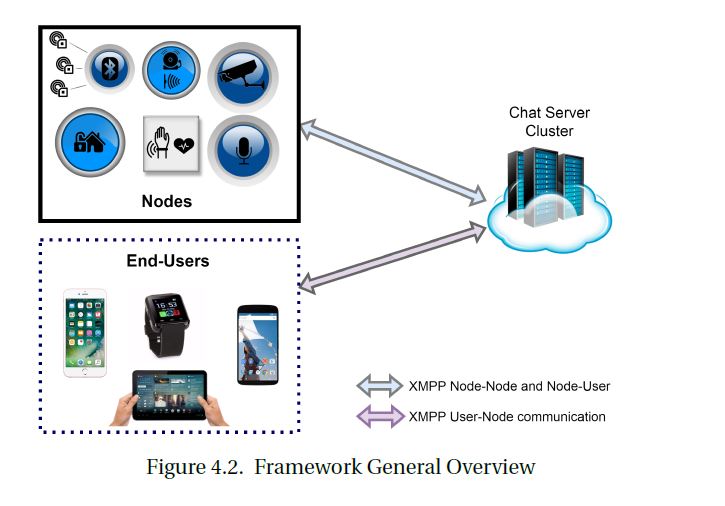
This framework is composed of four main parts: Peripherals, Computer-on-Modules,
End-user smartphone app, and the XMPP server. Both CoMs and smartphones become
XMPP clients and can directly message each other. In addition, CoMs have been designed
to also message each other autonomouslywith no user interference. Autonomous
messaging is implemented through a code module on nodes and are preconfigured by
end-users (See figure 4.2).
Each node has two main modes of operation: Setup and XMPP Client. Each mode requires
some interaction with an end-user through the integrated app. For the setup
mode an end-user may set configuration for node’s wireless connection and nodeXMPP
credentials and end-user accounts. The XMPP client mode is the main mode for operation.
An end-user with access to the node (through XMPP) will be able to supply it with
necessary module configuration for modules such as the autonomous event handling
and user management.

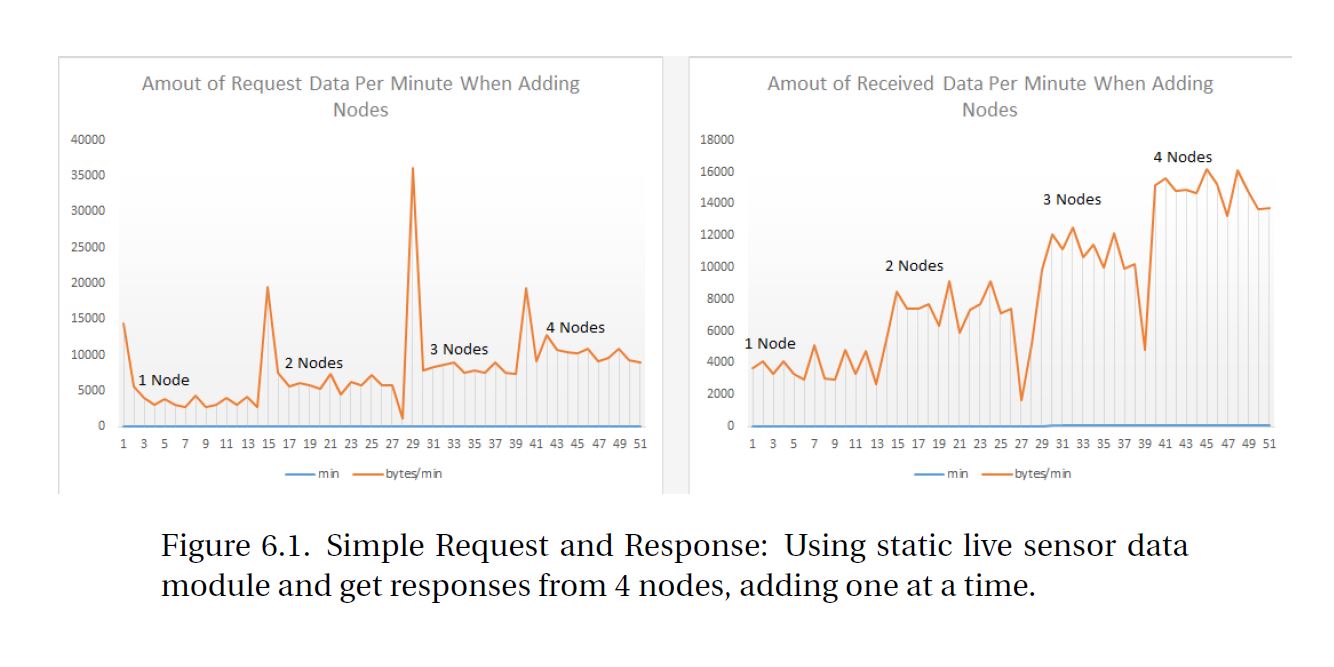
Figure 6.1 shows ingress and egress traffic with respect to the single user client app.
From the datagram on the left side, indicating the amount of request data, it shows that
traffic gains an amplitude for every added device. Also, it shows that every time a node is
added to the requesting list there is an instantaneous spike in mobile phone generated
traffic. The spikes represent data that has been requested from the server about the
presence of the node before transmitting the message requests. Excluding these server
queries, both the request commands and the received data traffic somewhat similar.
Both datagrams do step incrementally and there does not seem to be a distinguishable
lag in the commanding and receiving on the user side.
The project is an illustration that this concept can be generalized at smart city scale. So with no further due enjoy the read of "Adaptable, Fog-Computing Machine-to-Machine Internet of Things Communication Framework." This article can be found here: OhioLink Digital Library
Comments (0)